Practical guides to preparation, results and choosing tests—with medical sources and clear limitations.

Diabetes testing
Both relate to blood sugar, but they answer different questions. Match the test to your clinician's request before comparing packages.
Read article→
Thyroid testing
A thyroid profile is a list of named markers, not a standard promise. Check whether your request specifies TSH, free T4 or another test.
Read article→
Iron and blood counts
An 'iron check' may mean different measurements. Ask for the marker list so that a missing ferritin or CBC is not discovered after collection.
Read article→
Vitamin testing
Similar-looking vitamin D names do not always describe the same test. Start with the exact request, not the cheapest matching search result.
Read article→
Test preparation
Not every blood test needs fasting. Start with the exact test and the collection team's instructions, not a blanket rule.
Read article→
Results & follow-up
A highlighted value is a starting point for a conversation, not a diagnosis. Read the report alongside your history and symptoms.
Read article→
Preventive health
A useful package answers a health question. Learn to compare its contents, limitations and follow-up before booking.
Read article→
Home collection
Home collection changes where a sample is taken, not the need for preparation, safe handling and a clear follow-up plan.
Read article→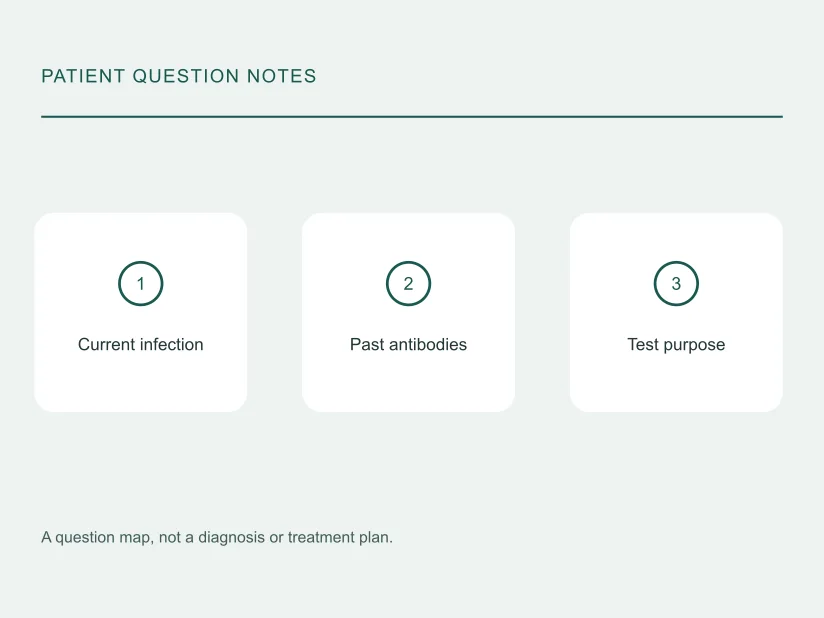
Practical questions
A catalogue may list several H. pylori tests, but they are not interchangeable answers to the same question. Ask whether your clinician is investigating a current infection or checking the outcome of treatment. That purpose helps determine the specimen and method, not the shortest turnaround or the largest package.
Read article→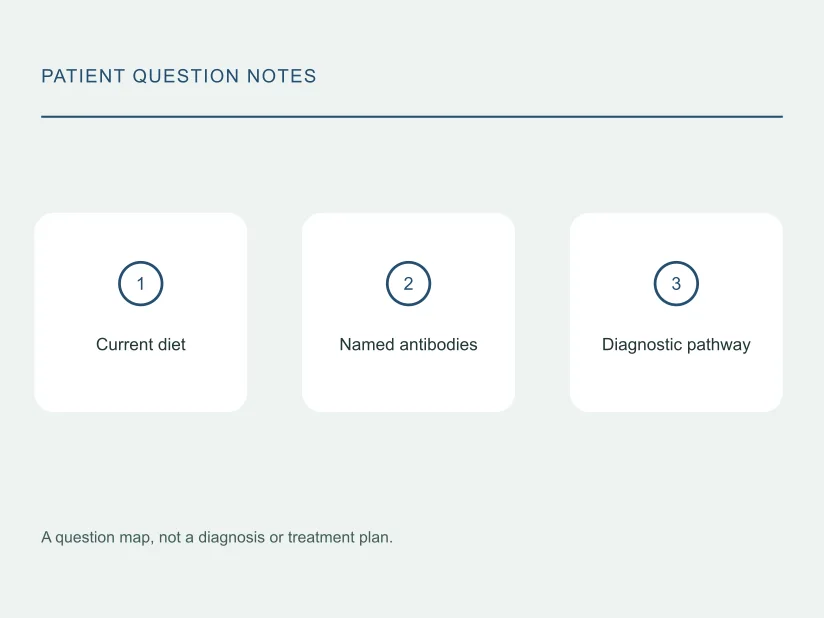
Practical questions
If coeliac disease is being investigated, changing your diet before the tests can change what they show. Tell the clinician whether you already avoid gluten before choosing a catalogue item. Coeliac disease, wheat allergy and a self-described food sensitivity are not interchangeable diagnoses.
Read article→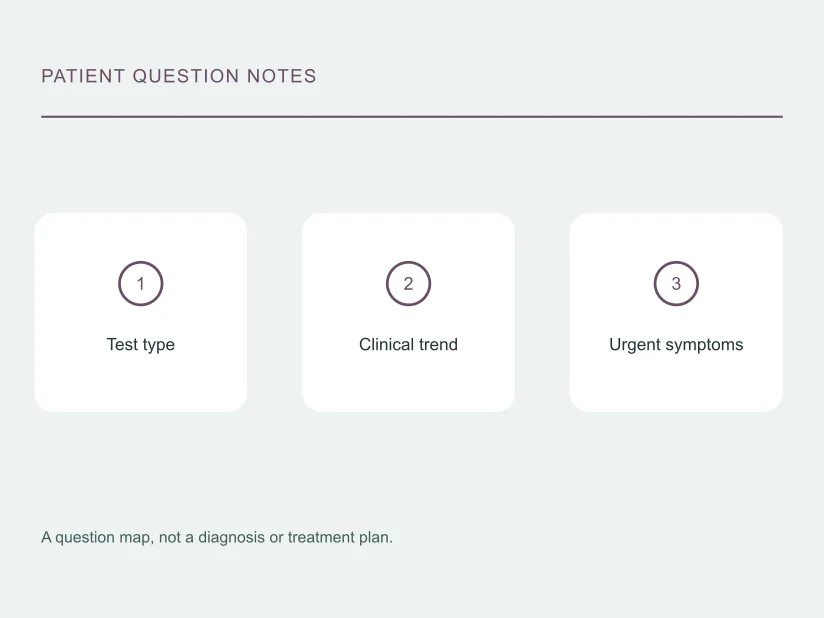
Practical questions
A qualitative hCG blood test gives a positive-or-negative result; a quantitative test reports an amount. Neither result alone can confirm where a pregnancy is located. If pregnancy is possible and there is pain or bleeding, seek clinical advice rather than relying on a catalogue test to decide whether care is needed.
Read article→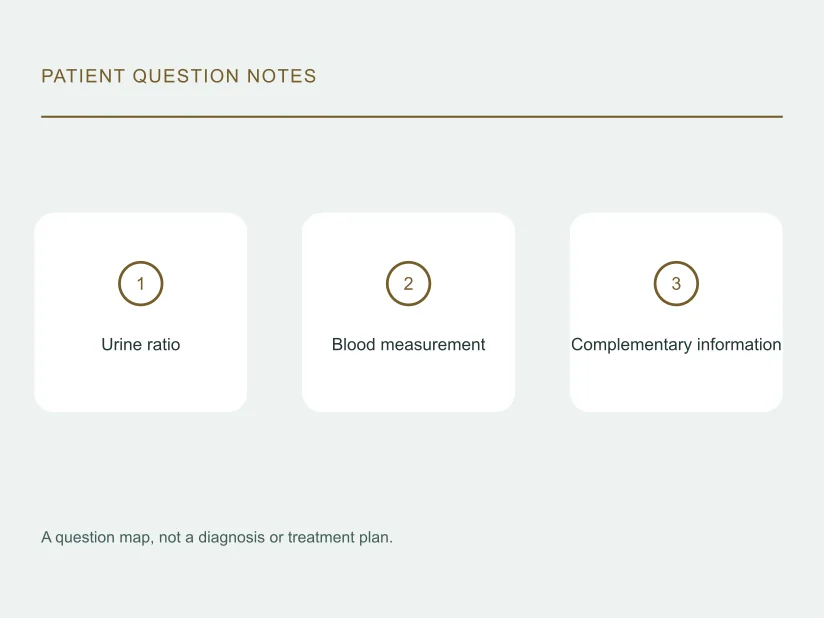
Practical questions
An order for urine ACR is not fulfilled by measuring creatinine in blood alone. ACR compares albumin with creatinine in urine, while blood creatinine often contributes to an estimate of kidney filtration. Your clinician may need both types of information; do not substitute one because the names share “creatinine”.
Read article→
Practical questions
Cortisol is involved in the body’s stress response, but a cortisol investigation is not a general score of how stressful your week was. Blood, saliva and urine tests can have different protocols. Select the exact clinician-requested investigation rather than whichever catalogue item has the shortest name.
Read article→
Practical questions
Severe or persistent abdominal pain should be assessed, not managed by choosing a pancreatic-enzyme test online. Lipase and amylase can contribute to a clinical investigation, but a number alone cannot determine the cause, severity or safe care setting for your symptoms.
Read article→
Practical questions
An unclear B12 result does not automatically mean you need every vitamin test or an injection. A clinician may consider another investigation, such as methylmalonic acid (MMA), to clarify the question. Ask what the additional result would change before adding it to your laboratory order.
Read article→